

20% OFF THE FIRST POUCH.
You're in. Check your inbox.

5 REASONS YOU BLOAT AFTER YOU EAT.
Bloated after eating? Here are the 5 reasons it happens.
(It's not the food.)
SKIP TO THE DEAL ↓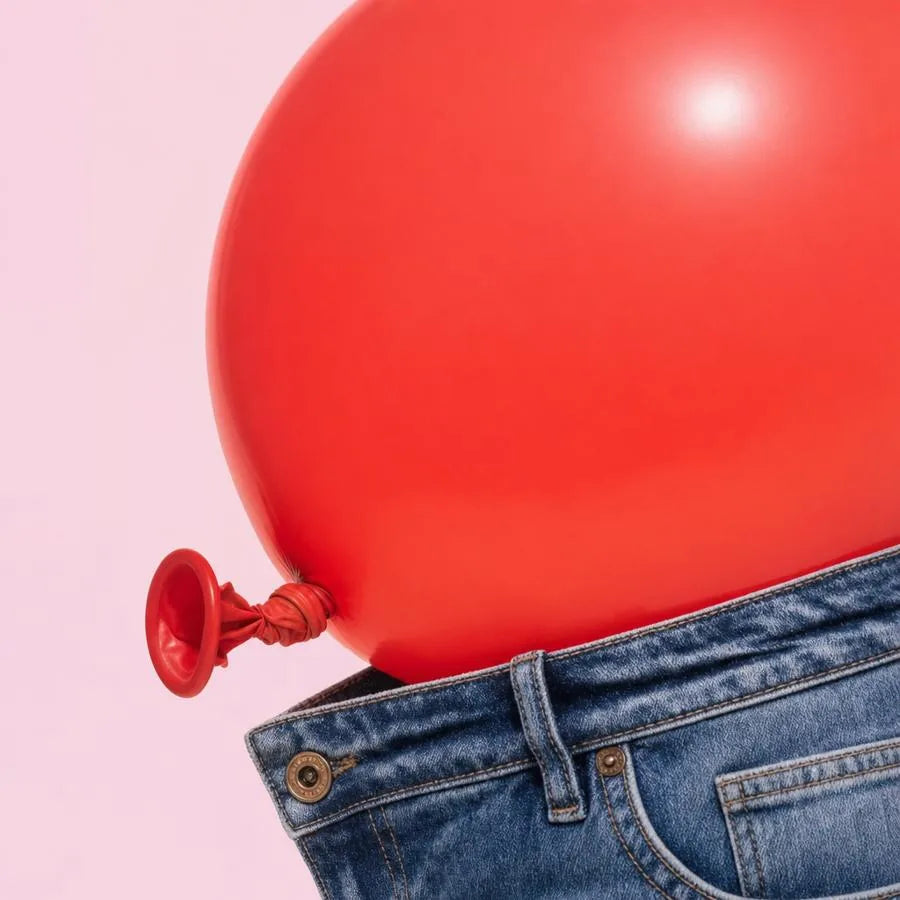
THE SHORT VERSION
It's not what you eat. It's what you digest.
MISSING THE RIGHT ENZYMES.
Enzymes break your food down so your body can absorb it. They work in stages. In your stomach, they start on protein. In your small intestine, they finish the job on protein, fat and carbs.
Without the right ones, food moves further down your gut only half broken down. That's where trillions of bacteria live, and they ferment it, the same way beer gets brewed. Fermenting makes gas: hydrogen, carbon dioxide, even methane. Undigested sugars also pull extra water into your gut.
The gas and water build up faster than your body can move them out, so your gut swells from the inside. That's the pressure, the tight waistband, the bloat.
Three common gaps:
Cooked food. Cooking kills the enzymes in food.
Dairy. You need an enzyme called lactase to break it down. Most people, as they age, make less and less of it. That's why dairy may not have been an issue when you were young, but now it can be.
Beans, onions and garlic. Humans don't make the enzymes for them at all, so your bacteria get all of it.

ACID HAS 3 JOBS:
NOT ENOUGH STOMACH ACID.
Too much acid gets the blame. You probably don't have enough.
Why you need acid:
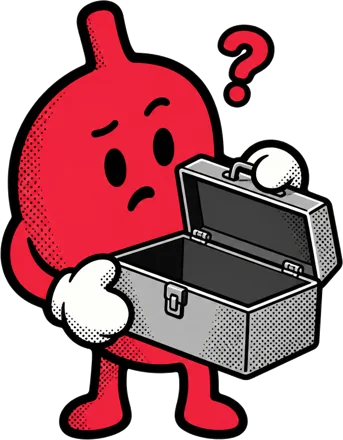
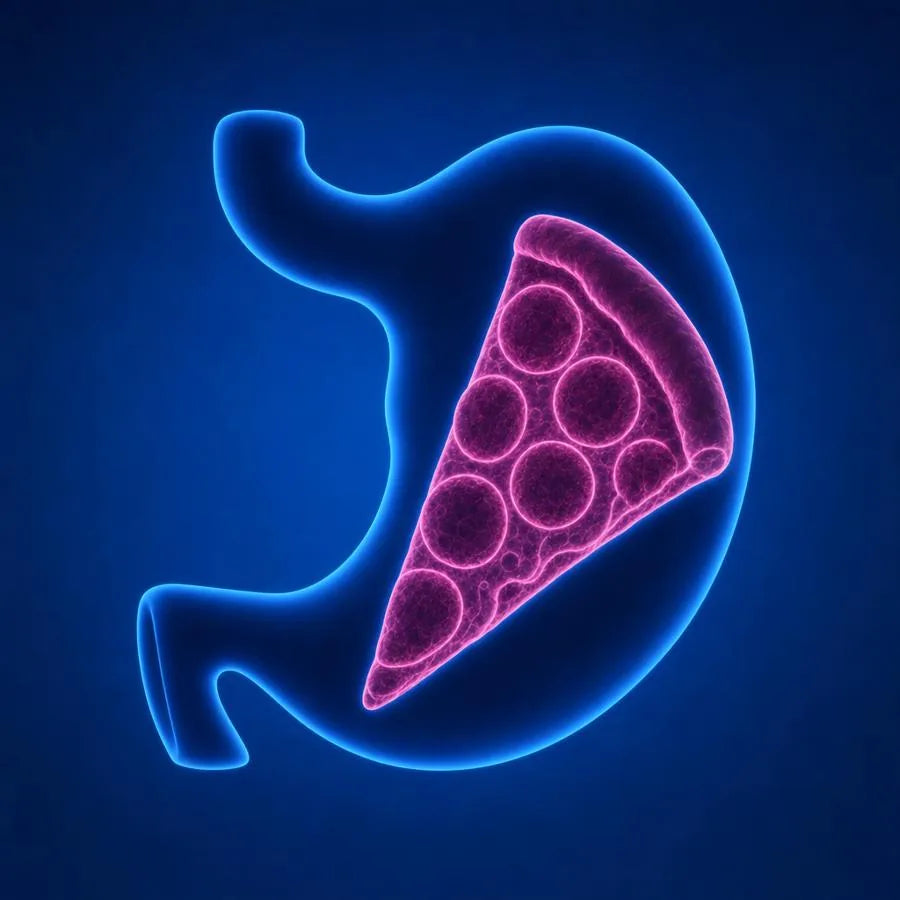
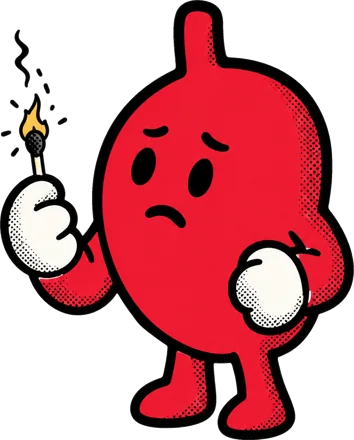
Your stomach needs strong acid to do its job. Acid breaks down protein. It gets the vitamins out of your food. And it kills the bacteria you swallow with every bite.
How low acid = bloating:
Without enough acid, food leaves your stomach half done. More bacteria get through too. Further down your gut, those bacteria feed on the leftovers and make gas. The gas builds up. That's the bloat.
Heartburn? Most of the time it's a loose valve at the top of your stomach. It's not too much acid.
What turns your acid down:
Age. Most people make less acid as they get older.
Stress. When your body is in fight-or-flight mode, it turns digestion down.
Antacids and acid blockers. They work by cutting or neutralizing acid. If you take them for months, your acid stays low.
TOO MUCH, TOO FAST.
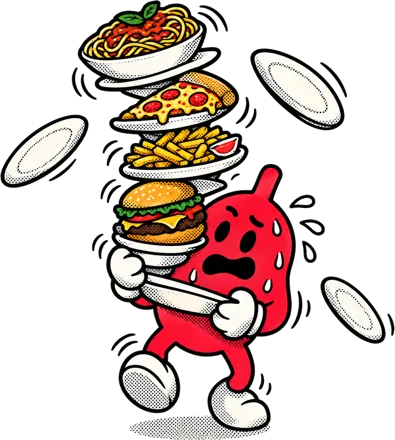
Too much food:
You like to eat, we get it, but your stomach doesn't empty all at once. It lets food out a little at a time. Fat and cheese slow it down even more. The more food, the more stretch pushes on the valve at the top of your stomach, and that's where the burn and the burps come from. And the more you eat, the more food can slip through half digested.
Eat too fast:
Eat fast and you don't chew enough. That causes 3 problems:
You skip step one. Your saliva has an enzyme that starts breaking down carbs. Chewing also tells your stomach to start making acid. Skip the chewing and you cut both short.
Bigger pieces. Enzymes only work on the outside of each piece. Big chunks take longer to break down, so more of the food goes through half done.
More air. The faster you eat, the more air you swallow. It has to travel 20-plus feet of gut to get out.

in group settings.
Why too much liquid is bad when eating:
Acid and enzymes work best strong. A big drink, or a few, with dinner waters them down. In one study, a single glass of water pushed stomach acid out of its working range within a minute. It bounces back in a few minutes, but keep refilling and you keep diluting. Plus, it all takes up room in a stomach that's already full.
Put all that on a gut already short on enzymes (#1) and acid (#2), and it can't keep up.
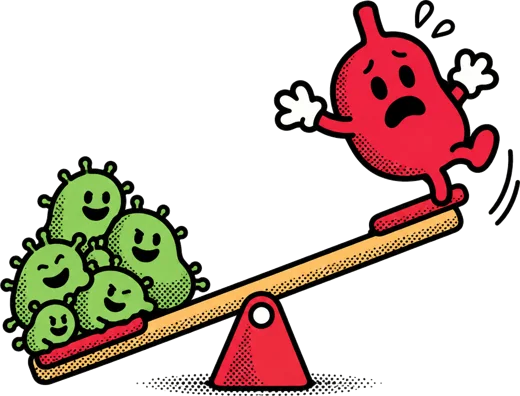
YOUR GUT IS OUT OF BALANCE.
The wrong bacteria turn a normal meal into gas.
Most food today is full of junk. Preservatives, colorings, artificial sweeteners, cheap seed oils. The list goes on and on.
On top of that, more and more people deal with SIBO and H. pylori: too many of the wrong bacteria, in places they don't belong.
How that turns into bloat:
Junk changes your bacteria. In a 2022 study, 2 weeks of common artificial sweeteners changed people's gut bacteria. A common food additive (CMC, found in ice cream and sauces) did it in 11 days. Your bacteria decide how much gas a meal makes, so a new mix can mean more gas.
SIBO puts bacteria in the wrong spot. Bacteria in your small intestine get to your food before you finish digesting it. The gas starts right after you eat, in a tube too narrow to hold it.
H. pylori turns off your acid. It makes ammonia to neutralize the acid around it. Less acid means food sits undigested longer, and bacteria ferment it into gas.
HABITS THAT MAKE IT WORSE.
Too much liquid waters down your food and stomach.
A big glass of water, soda or beer with the meal waters down your stomach acid and enzymes, right when they're needed.
Sip it. A little is fine.
Why bubbles = bloat:
Bubbles are gas. Drink them with a meal and that gas lands in your stomach on top of your food. It has to get out somehow: up as a burp, or down as bloat.
They can also make you hungrier. In one study, the bubbles raised ghrelin, your "I'm hungry" hormone, and rats on fizzy drinks ate more than rats on flat ones. So you get more gas and a bigger plate. Soda adds sugar for your gut bacteria to turn into even more gas.
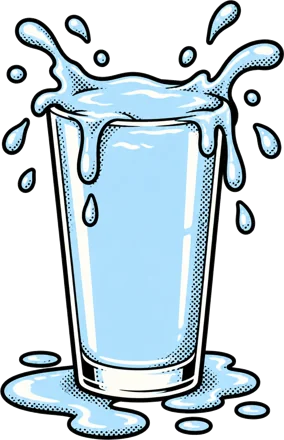 Drinking too muchBig drinks with meals water down your acid and enzymes.
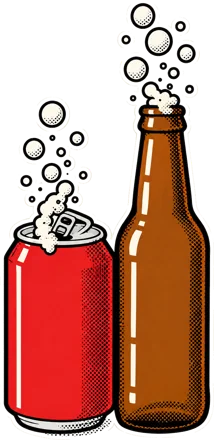 Carbonated drinksThe bubbles add gas and make digestion worse.
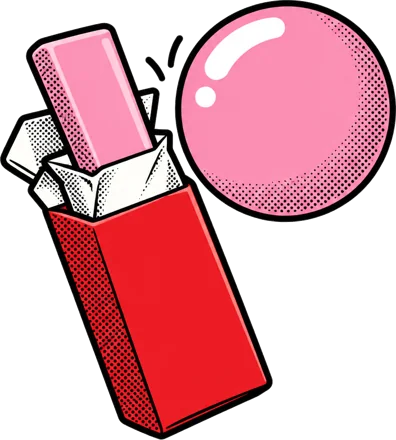 Gum afterwardsMore chewing means more swallowed air.
Beer is worse:
It starts as barley. Barley is full of fructans, the same gassy carbs that are in onions and garlic. Brewing gets rid of a lot of them, but not all.
Alcohol kills gut bacteria. It doesn't pick sides. It wipes out the good ones too.
Alcohol makes your gut leaky. In one study, one night of heavy drinking let bacteria toxins leak out of the gut and into the blood. An irritated gut feels every bit of that gas.
SOUND FAMILIAR?
Probiotic every morning. Gut gummies from an ad.
Dinner still ended the same way.
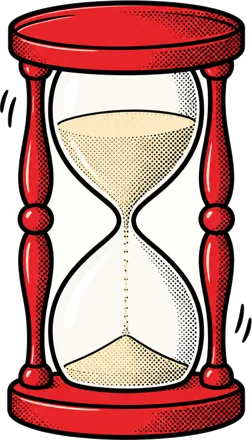
Take it every day. For weeks. For months.
Is it working? Maybe. Prob not?
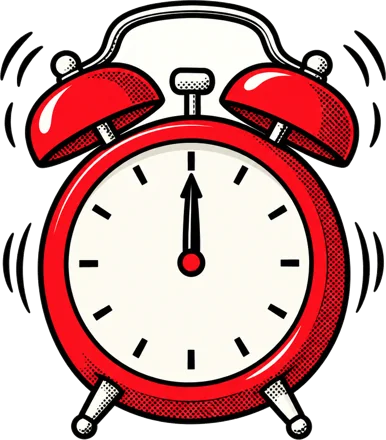
Right at the meal. Take it with your first few bites.
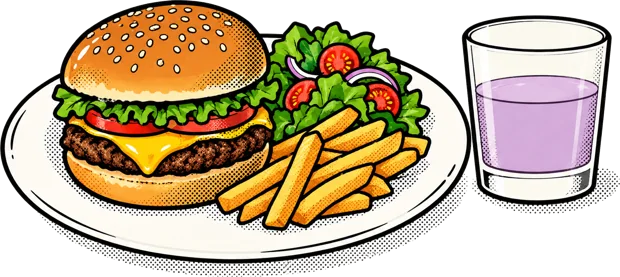
It helps or it doesn't. You find out tonight, not in 3 months.
You took a probiotic every morning.
You tried the gut gummies you saw online, the ones that promised “a healthy gut.”
You thought they'd help. But dinner still ended the same way.
Those things have a time and a place. But:
They can make it worse. A lot of gut powders are loaded with fiber. More fiber can mean more gas and more bloat.
They're a long game. Take them every day, and maybe one day your gut feels better. They don't help with the meal in front of you.
Being good for your gut in general and being good for your gut right now are two different things.
JAB Stix is for right now. In the moment. When you eat. Not a week from now. Not a month from now. Right now.
MEET JAB STIX.
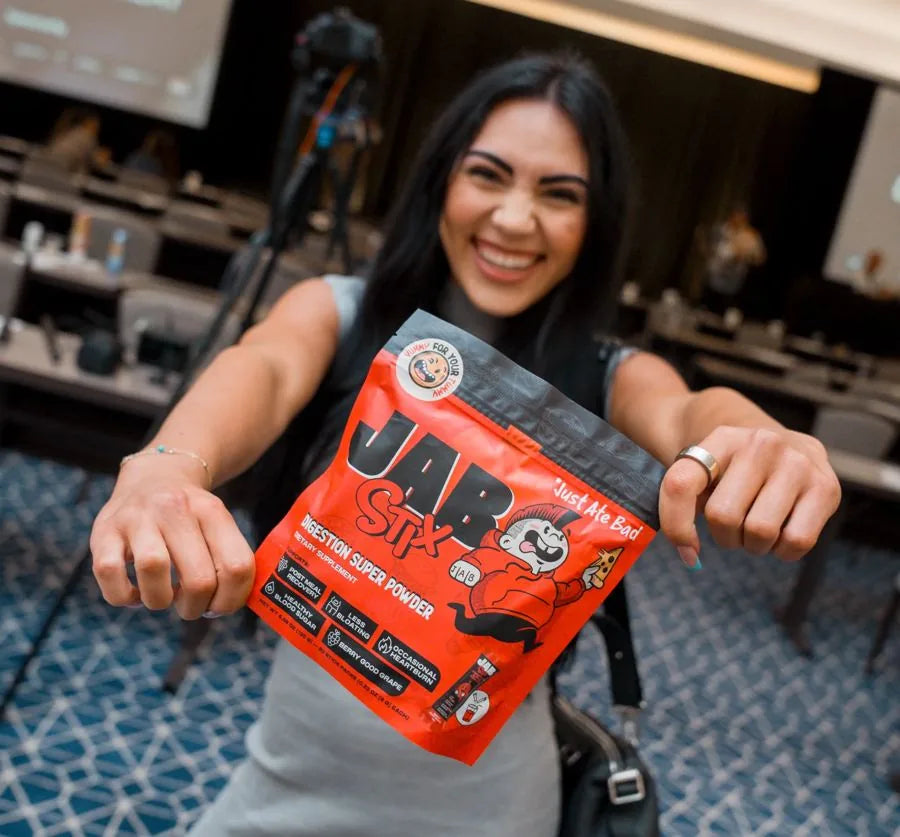
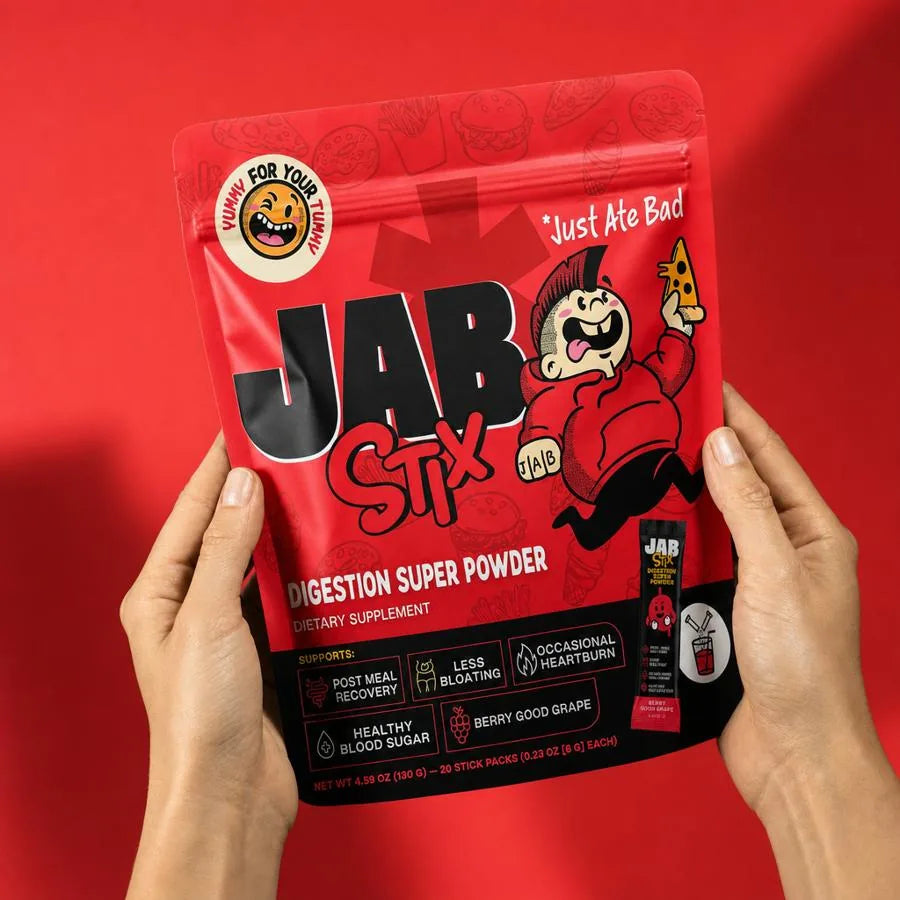
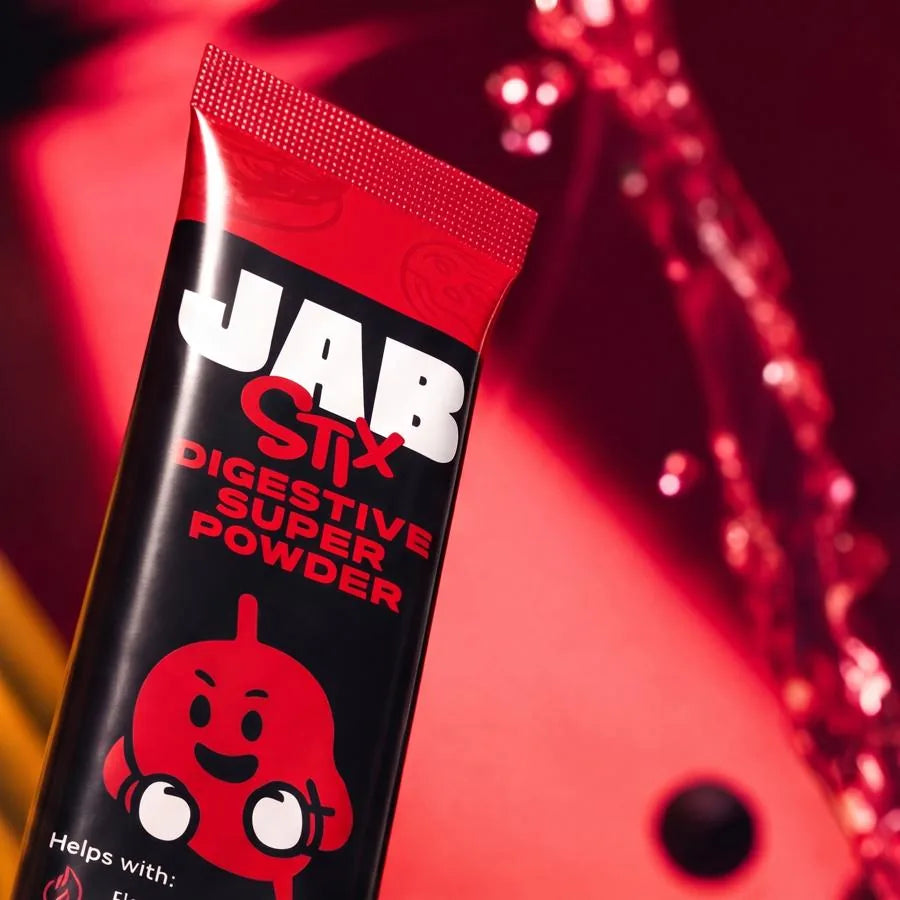
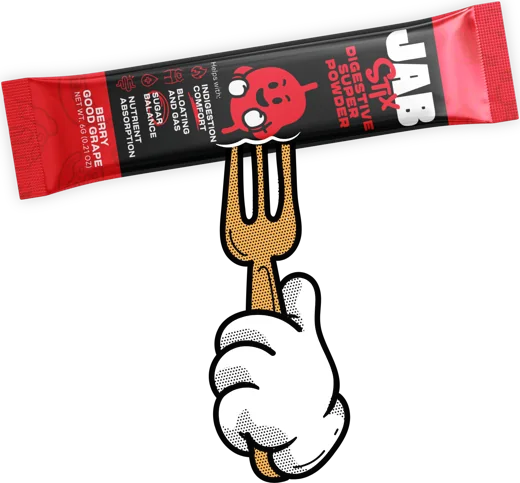
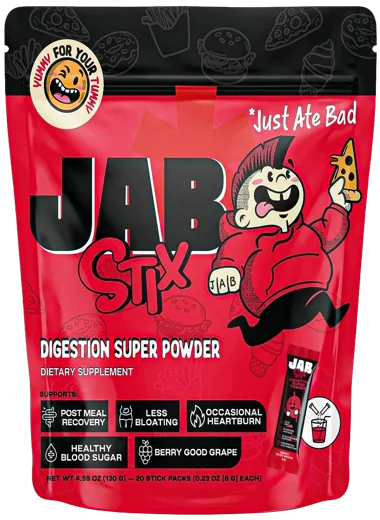
A travel-friendly, powdered stick you take with your meal. For occasional bloating, burning, fullness or just all around general digestion support.
“Tastes like the candy stix from the 90s.”
— Ashley
HOW TO USE IT
 1
1Take it with your first few bites.
Big, heavy meal? Take 2.
 2
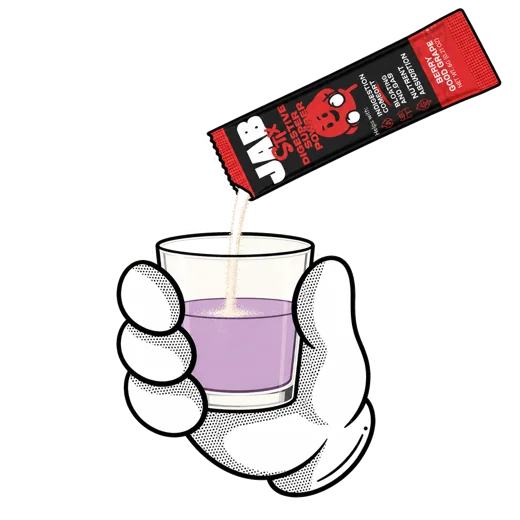
2Mix with a little water.
About half a cup. Stir and drink.
 3
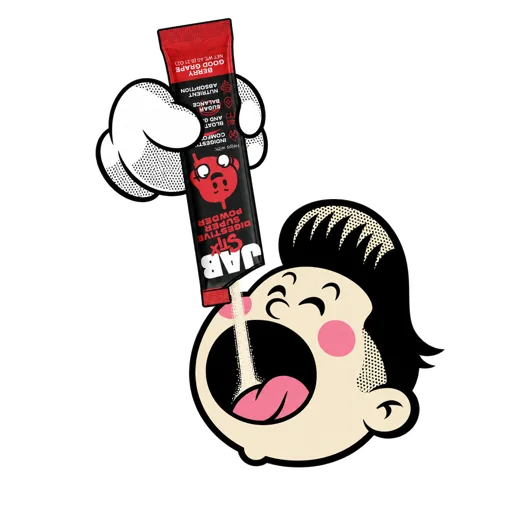
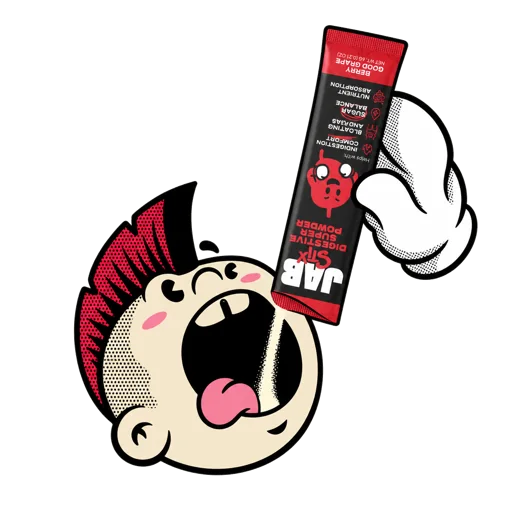
3Or pour it straight in your mouth.
No cup needed.
WHAT SHOULD YOU FEEL?
Nothing, if all goes well.
Less bloating, burn and uncomfortable feelings after you eat.
GET YOUR BACKUP.
30-DAY MONEY-BACK GUARANTEE · FREE SHIPPING OVER $65
RISK FREE.
Try it out. Don't like it? RETURN IT.
QUICK QUESTIONS
Your stomach can feel full, hard and tight, and it may look bigger than it did that morning. Some people also get discomfort, burping or gas.
Overnight your body has time to digest, so there is less gas and waste in your gut. Through the day, gas builds up as you eat, especially with big meals, gassy foods and swallowed air.
An occasional bloat after a meal is common. If it happens after most meals, look at the 5 reasons above: enzymes, acid, how fast and how much you eat, your gut bacteria, and what you drink with the meal. If it lasts more than a week or is painful, see the doctor note below.
No. It's enzymes, a probiotic and acid support. No fiber.
With your first few bites. Only the meals you want it for.
Grape candy. Sweet in water, tart straight in your mouth.
You get your money back within 30 days.
WHEN TO SEE A DOCTOR
See a doctor if your bloating lasts more than a week, is very painful, or comes with fever, vomiting, bleeding, weakness, or weight loss you can't explain. If it keeps coming back or is severe, and comes with belly pain, changes in your bathroom habits or blood in your stool, get checked too. JAB Stix is for the occasional bloat after a meal, not for these symptoms.
† Blood sugar support: for blood sugar already within the normal range.
* BS50 study: 76 healthy adults, placebo-controlled. 47% had better bloating, burping and gas (scored together) vs 22% on placebo.
These statements have not been evaluated by the Food and Drug Administration. This product is not intended to diagnose, treat, cure, or prevent any disease.
JABSTIX.COM
5 REASONS YOU BLOAT AFTER YOU EAT.
Bloated after eating? Here are the 5 reasons it happens.
(It's not the food.)
SKIP TO THE DEAL ↓THE SHORT VERSION
It's not what you eat. It's what you digest.
1Missing enzymes2Not enough acid3Too much, too fast4 Gut out of balance5
 Habits that make it worseWHAT SHOULD I DO? ↓SKIP TO THE SOLUTION ↓
MISSING THE RIGHT ENZYMES.
Enzymes break your food down so your body can absorb it. They work in stages. In your stomach, they start on protein. In your small intestine, they finish the job on protein, fat and carbs.
Without the right ones, food moves further down your gut only half broken down. That's where trillions of bacteria live, and they ferment it, the same way beer gets brewed. Fermenting makes gas: hydrogen, carbon dioxide, even methane. Undigested sugars also pull extra water into your gut.
The gas and water build up faster than your body can move them out, so your gut swells from the inside. That's the pressure, the tight waistband, the bloat.
Three common gaps:
Cooked food. Cooking kills the enzymes in food.
Dairy. You need an enzyme called lactase to break it down. Most people, as they age, make less and less of it. That's why dairy may not have been an issue when you were young, but now it can be.
Beans, onions and garlic. Humans don't make the enzymes for them at all, so your bacteria get all of it.
NOT ENOUGH STOMACH ACID.
Too much acid gets the blame. You probably don't have enough.
ACID HAS 3 JOBS:
Why you need acid:
Your stomach needs strong acid to do its job. Acid breaks down protein. It gets the vitamins out of your food. And it kills the bacteria you swallow with every bite.
How low acid = bloating:
Without enough acid, food leaves your stomach half done. More bacteria get through too. Further down your gut, those bacteria feed on the leftovers and make gas. The gas builds up. That's the bloat.
Heartburn? Most of the time it's a loose valve at the top of your stomach. It's not too much acid.
What turns your acid down:
Age. Most people make less acid as they get older.
Stress. When your body is in fight-or-flight mode, it turns digestion down.
Antacids and acid blockers. They work by cutting or neutralizing acid. If you take them for months, your acid stays low.
TOO MUCH, TOO FAST.
in group settings.
Too much food:
You like to eat, we get it, but your stomach doesn't empty all at once. It lets food out a little at a time. Fat and cheese slow it down even more. The more food, the more stretch pushes on the valve at the top of your stomach, and that's where the burn and the burps come from. And the more you eat, the more food can slip through half digested.
Eat too fast:
Eat fast and you don't chew enough. That causes 3 problems:
You skip step one. Your saliva has an enzyme that starts breaking down carbs. Chewing also tells your stomach to start making acid. Skip the chewing and you cut both short.
Bigger pieces. Enzymes only work on the outside of each piece. Big chunks take longer to break down, so more of the food goes through half done.
More air. The faster you eat, the more air you swallow. It has to travel 20-plus feet of gut to get out.
Why too much liquid is bad when eating:
Acid and enzymes work best strong. A big drink, or a few, with dinner waters them down. In one study, a single glass of water pushed stomach acid out of its working range within a minute. It bounces back in a few minutes, but keep refilling and you keep diluting. Plus, it all takes up room in a stomach that's already full.
Put all that on a gut already short on enzymes (#1) and acid (#2), and it can't keep up.
YOUR GUT IS OUT OF BALANCE.
The wrong bacteria turn a normal meal into gas.
Most food today is full of junk. Preservatives, colorings, artificial sweeteners, cheap seed oils. The list goes on and on.
On top of that, more and more people deal with SIBO and H. pylori: too many of the wrong bacteria, in places they don't belong.
How that turns into bloat:
Junk changes your bacteria. In a 2022 study, 2 weeks of common artificial sweeteners changed people's gut bacteria. A common food additive (CMC, found in ice cream and sauces) did it in 11 days. Your bacteria decide how much gas a meal makes, so a new mix can mean more gas.
SIBO puts bacteria in the wrong spot. Bacteria in your small intestine get to your food before you finish digesting it. The gas starts right after you eat, in a tube too narrow to hold it.
H. pylori turns off your acid. It makes ammonia to neutralize the acid around it. Less acid means food sits undigested longer, and bacteria ferment it into gas.
HABITS THAT MAKE IT WORSE.
Too much liquid waters down your food and stomach.
A big glass of water, soda or beer with the meal waters down your stomach acid and enzymes, right when they're needed.
Sip it. A little is fine.
Why bubbles = bloat:
Bubbles are gas. Drink them with a meal and that gas lands in your stomach on top of your food. It has to get out somehow: up as a burp, or down as bloat.
They can also make you hungrier. In one study, the bubbles raised ghrelin, your "I'm hungry" hormone, and rats on fizzy drinks ate more than rats on flat ones. So you get more gas and a bigger plate. Soda adds sugar for your gut bacteria to turn into even more gas.
Beer is worse:
It starts as barley. Barley is full of fructans, the same gassy carbs that are in onions and garlic. Brewing gets rid of a lot of them, but not all.
Alcohol kills gut bacteria. It doesn't pick sides. It wipes out the good ones too.
Alcohol makes your gut leaky. In one study, one night of heavy drinking let bacteria toxins leak out of the gut and into the blood. An irritated gut feels every bit of that gas.
SOUND FAMILIAR?
Probiotic every morning. Gut gummies from an ad.
Dinner still ended the same way.
Take it every day. For weeks. For months.
Is it working? Maybe. Prob not?
Right at the meal. Take it with your first few bites.
It helps or it doesn't. You find out tonight, not in 3 months.
You took a probiotic every morning.
You tried the gut gummies you saw online, the ones that promised “a healthy gut.”
You thought they'd help. But dinner still ended the same way.
Those things have a time and a place. But:
They can make it worse. A lot of gut powders are loaded with fiber. More fiber can mean more gas and more bloat.
They're a long game. Take them every day, and maybe one day your gut feels better. They don't help with the meal in front of you.
Being good for your gut in general and being good for your gut right now are two different things.
JAB Stix is for right now. In the moment. When you eat. Not a week from now. Not a month from now. Right now.
MEET JAB STIX.
A travel-friendly, powdered stick you take with your meal. For occasional bloating, burning, fullness or just all around general digestion support.
“Tastes like the candy stix from the 90s.”
— Ashley
HOW TO USE IT
Take it with your first few bites.
Big, heavy meal? Take 2.
Mix with a little water.
About half a cup. Stir and drink.
Or pour it straight in your mouth.
No cup needed.
WHAT SHOULD YOU FEEL?
Nothing, if all goes well.
Less bloating, burn and uncomfortable feelings after you eat.
GET YOUR BACKUP.
30-DAY MONEY-BACK GUARANTEE · FREE SHIPPING OVER $65
RISK FREE.
Try it out. Don't like it? RETURN IT.
QUICK QUESTIONS
Your stomach can feel full, hard and tight, and it may look bigger than it did that morning. Some people also get discomfort, burping or gas.
Overnight your body has time to digest, so there is less gas and waste in your gut. Through the day, gas builds up as you eat, especially with big meals, gassy foods and swallowed air.
An occasional bloat after a meal is common. If it happens after most meals, look at the 5 reasons above: enzymes, acid, how fast and how much you eat, your gut bacteria, and what you drink with the meal. If it lasts more than a week or is painful, see the doctor note below.
No. It's enzymes, a probiotic and acid support. No fiber.
With your first few bites. Only the meals you want it for.
Grape candy. Sweet in water, tart straight in your mouth.
You get your money back within 30 days.
WHEN TO SEE A DOCTOR
See a doctor if your bloating lasts more than a week, is very painful, or comes with fever, vomiting, bleeding, weakness, or weight loss you can't explain. If it keeps coming back or is severe, and comes with belly pain, changes in your bathroom habits or blood in your stool, get checked too. JAB Stix is for the occasional bloat after a meal, not for these symptoms.
† Blood sugar support: for blood sugar already within the normal range.
* BS50 study: 76 healthy adults, placebo-controlled. 47% had better bloating, burping and gas (scored together) vs 22% on placebo.
These statements have not been evaluated by the Food and Drug Administration. This product is not intended to diagnose, treat, cure, or prevent any disease.
JABSTIX.COM